Archaeology
Buildings, objects, inscriptions, settlement patterns and environmental evidence.
Roman Judea and Galilee, c. 6 BCE-400 CE
Travel through the places and communities connected with Jesus while keeping archaeology, early texts, later tradition and faith claims visibly distinct.
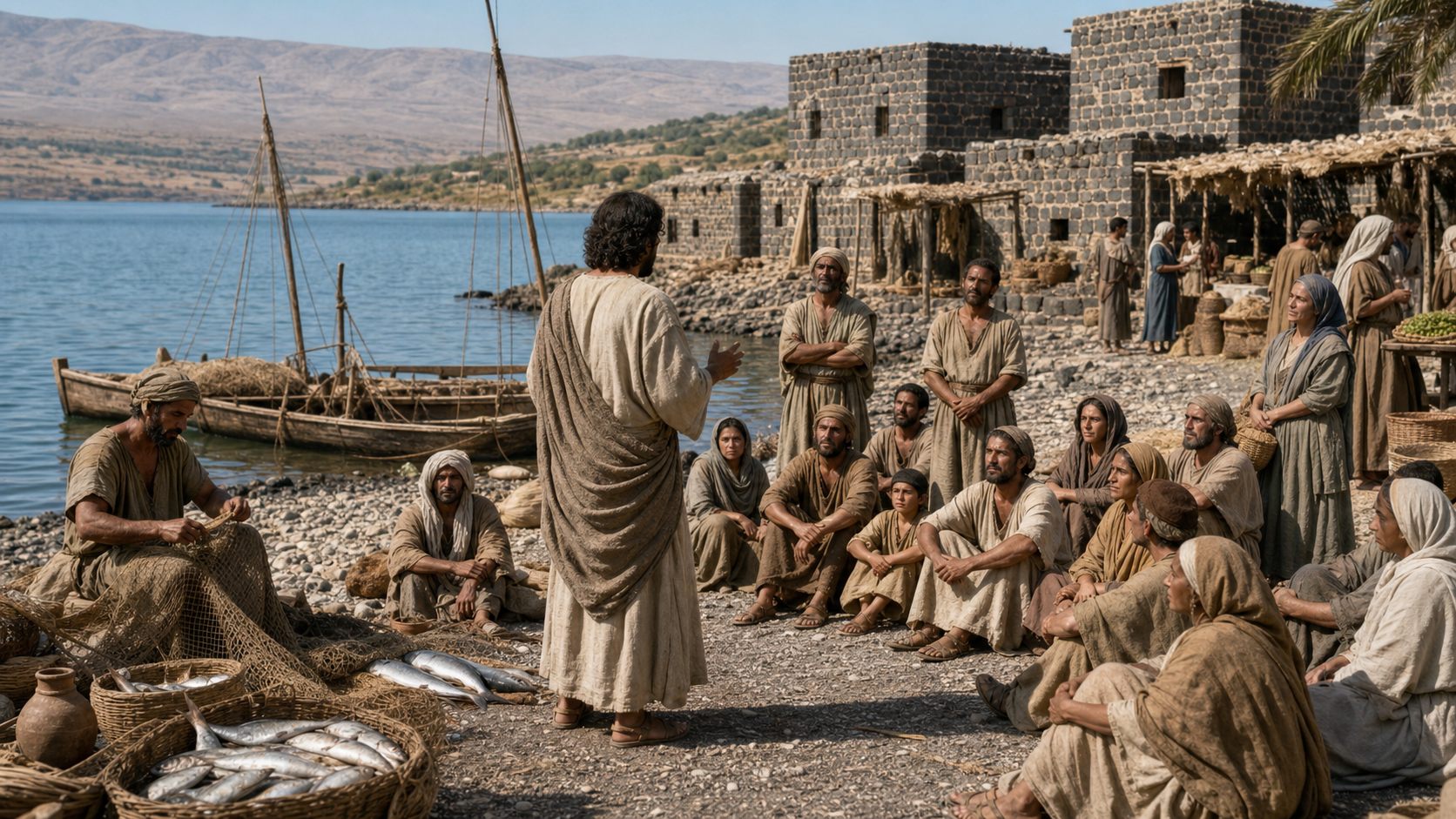
Open the evidence layersOriginal evidence-based artistic reconstruction. The central teacher is generalized; no authenticated portrait of Jesus survives.
Historical setting
Roman Judea and GalileeProbable life dates
c. 6-4 BCE to 30 or 33 CEEarliest Christian texts
Paul's letters, c. 49-62 CECritical rule
Evidence and faith are separate layersFour lenses
Visitors can respect religious meaning without mislabeling later tradition or faith as archaeological verification.
Buildings, objects, inscriptions, settlement patterns and environmental evidence.
Paul, the Gospels, Josephus, Tacitus and other ancient writings, each shown with composition date and authorship limits.
Pilgrimage identifications, churches and local memories recorded after the events they commemorate.
Incarnation, miracles, resurrection and theological meaning, presented respectfully but not as archaeological findings.
From ministry to institution
Dates remain approximate. Texts describe activity and meaning; archaeology reconstructs places and material life.
Matthew and Luke place Jesus' birth in Bethlehem, while his association with Nazareth is earlier and broader across Gospel traditions. Archaeology cannot identify a birthplace.
Early texts connect Jesus with John the Baptist near the Jordan. The exact location is uncertain, and divine manifestations belong to faith interpretation.
The earliest narrative sources describe teaching, proclamation of the kingdom of God, healing and exorcism traditions, shared meals, disputes and the gathering of followers.
Jesus was executed by Roman crucifixion under Pontius Pilate. The exact year and route through the city remain debated.
Jewish Jesus-following groups developed in Jerusalem, Antioch, Rome and other cities. Paul's letters are the earliest surviving Christian writings.
Canonical narratives were composed and circulated after the destruction of Jerusalem in 70 CE; their dates and relationships remain approximate.
An adapted courtyard house with a baptistery supplies a direct archaeological anchor for a pre-Constantinian Christian meeting space.
Toleration accelerated public church building. Nicaea debated Christology and church order; it did not select the biblical canon.
Galilee and Capernaum
Gospel traditions place much of Jesus' public activity among villages, fields and lake fisheries. Boats, nets, basalt houses and regional markets are archaeological context. Exact routes, speeches and individual faces come from texts or reconstruction.
Jerusalem under Roman rule
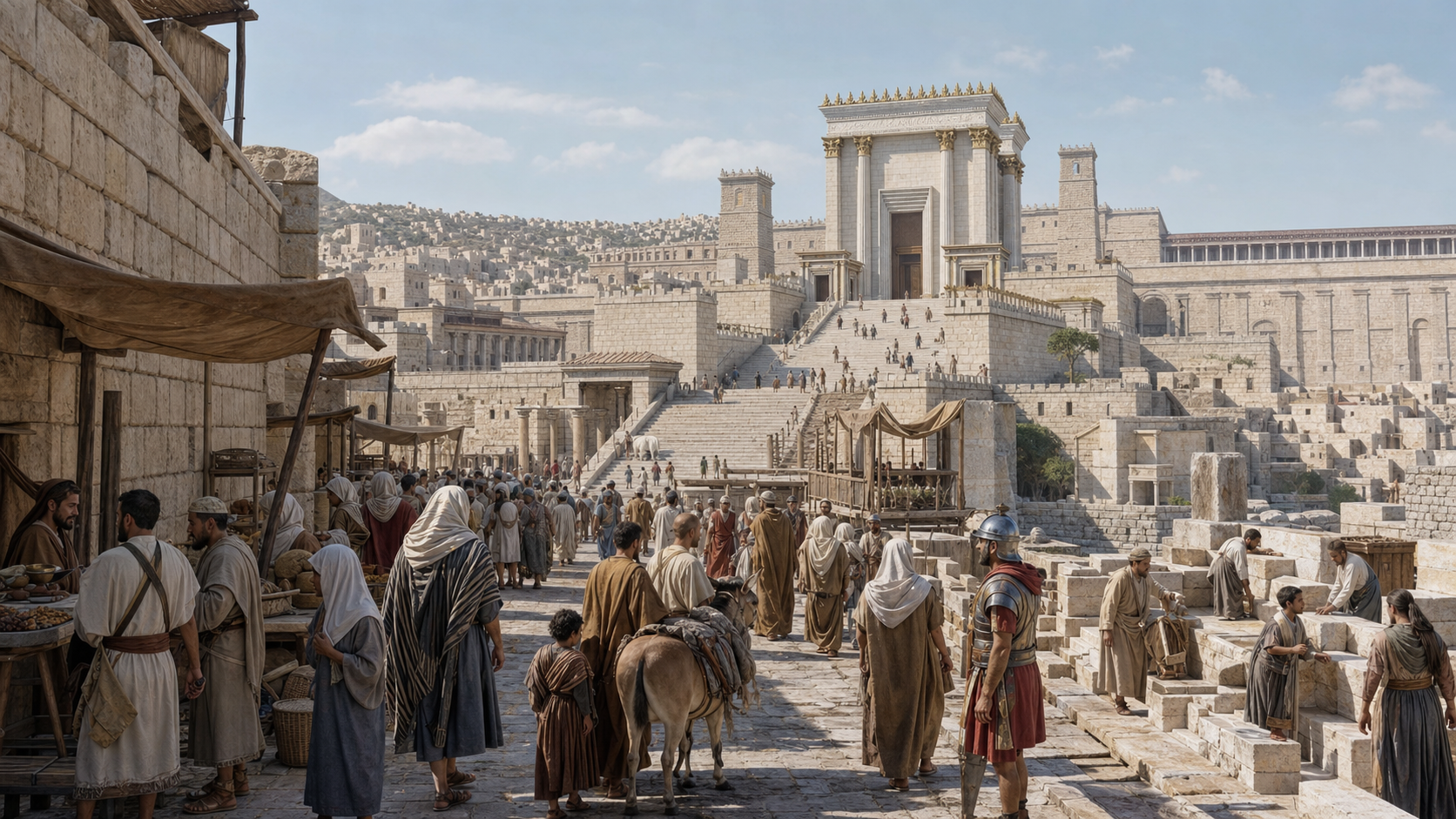
Jesus' final visit belongs to a crowded Jewish pilgrimage city governed within Roman imperial power. Crucifixion under Pontius Pilate is historically strong; resurrection is a central faith claim and appears only within the faith layer.
Map anchors
A modern shrine can preserve an old tradition without proving every event attributed to its exact location.
Small Galilean Jewish settlement with courtyard houses, caves, cisterns and agricultural terraces. No house is securely identifiable as Jesus' residence.
Basalt lakeshore village of fishing, farming and craft. The visible white synagogue is later than the ministry period.
Early texts and later pilgrimage landscapes preserve a broad river setting, not one archaeologically proven event point.
Herodian streets, ritual baths, markets and the Second Temple formed the setting for the final visit and earliest Jerusalem community.
Roman provincial capital where the Pilate inscription confirms his title as prefect; it does not document Jesus' trial.
Cosmopolitan Roman city where early mixed Jewish and non-Jewish Christian communities are textually attested.
Frontier city preserving an adapted Christian house alongside a synagogue and several polytheist sanctuaries.
Walled lakeside Roman city that hosted the council in 325; the exact meeting hall is unknown.
Evidence ledger
The public page summarizes sources; the atlas preserves claim-level evidence and uncertainty for future expansion.
Early Roman domestic archaeology and reconstruction limits.
Open sourceMaterial evidence including the Pontius Pilate inscription.
Open source