Early urban and literate horizons
Keeladi evidence and Tamil-Brahmi finds frame debates about settlement, craft and literacy.
South India, c. 600 BCE-1300 CE
தமிழகம்
A long cultural landscape of river valleys, ecological regions, craft towns, ports, poetry and increasingly monumental temple institutions.
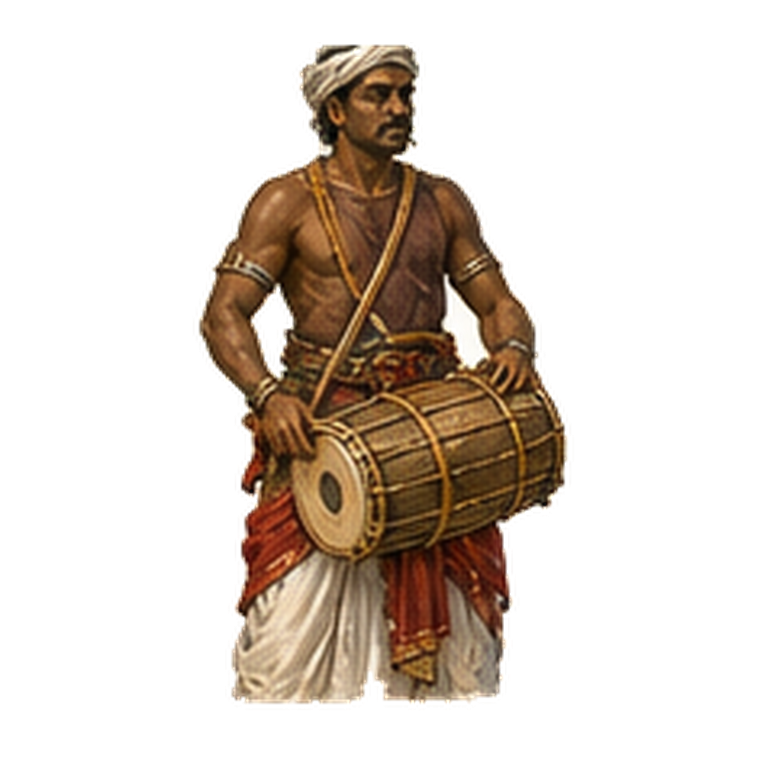
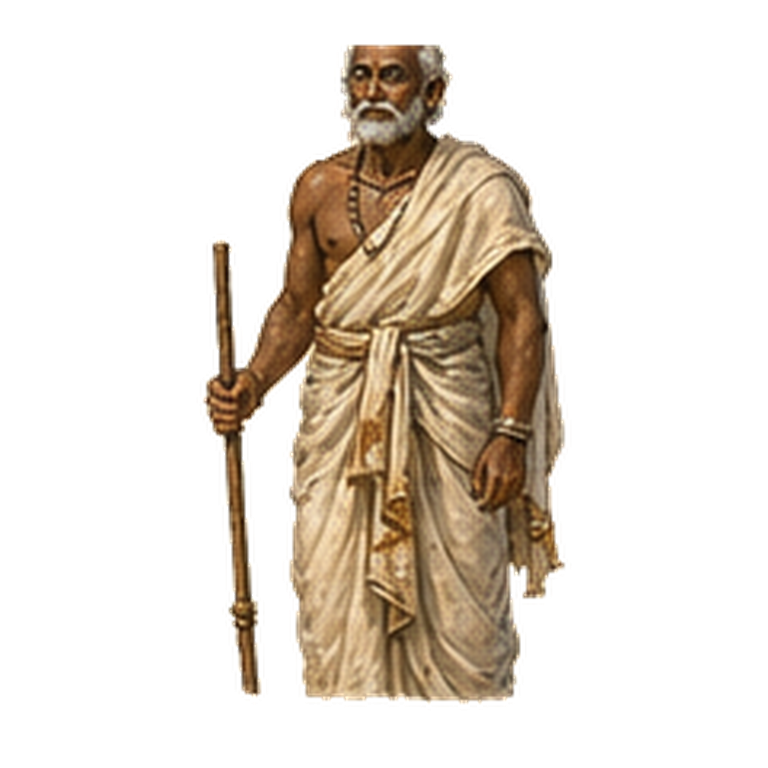
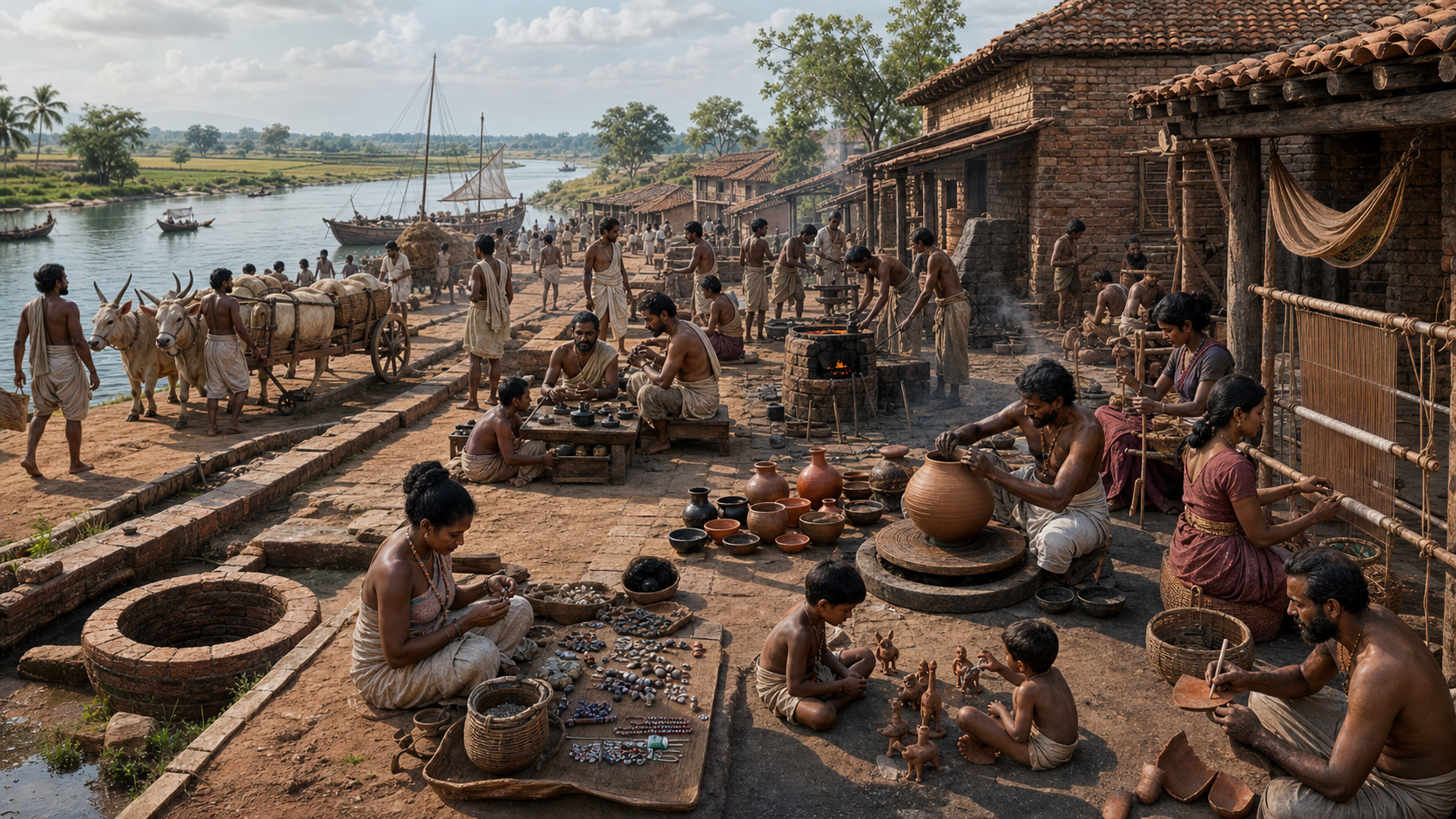
Begin with an ordinary dayOriginal interpretive reconstruction. Details synthesize archaeological evidence; it is not a photograph.
Core geography
Present-day Tamil Nadu and adjoining parts of Kerala, Karnataka, Andhra and Sri LankaPolitical landscape
Chera, Chola, Pandya and many local chiefs, later Pallava and imperial Chola statesEconomic base
Wet-rice and millet farming, herding, iron, textiles, beads, salt, pearls and maritime tradeEvidence
Excavations, Tamil-Brahmi inscriptions, coins, ceramics, literature, temples and copper platesLong view
Dates are approximate and regional. The purpose is to prevent objects and practices from different centuries being shown as one timeless culture.
Keeladi evidence and Tamil-Brahmi finds frame debates about settlement, craft and literacy.
Poetic traditions, inland craft centers and ports connect varied ecological and political communities.
Changing dynasties, religious institutions and inscriptional cultures reshape the region.
Rock-cut, monolithic and structural temples expand alongside devotional poetry and urban centers.
Royal power, irrigation, merchant networks, bronze casting and large temple institutions reach new scales.
Lived time
A composite day reveals recurring work, movement and ritual while keeping status and regional differences visible.
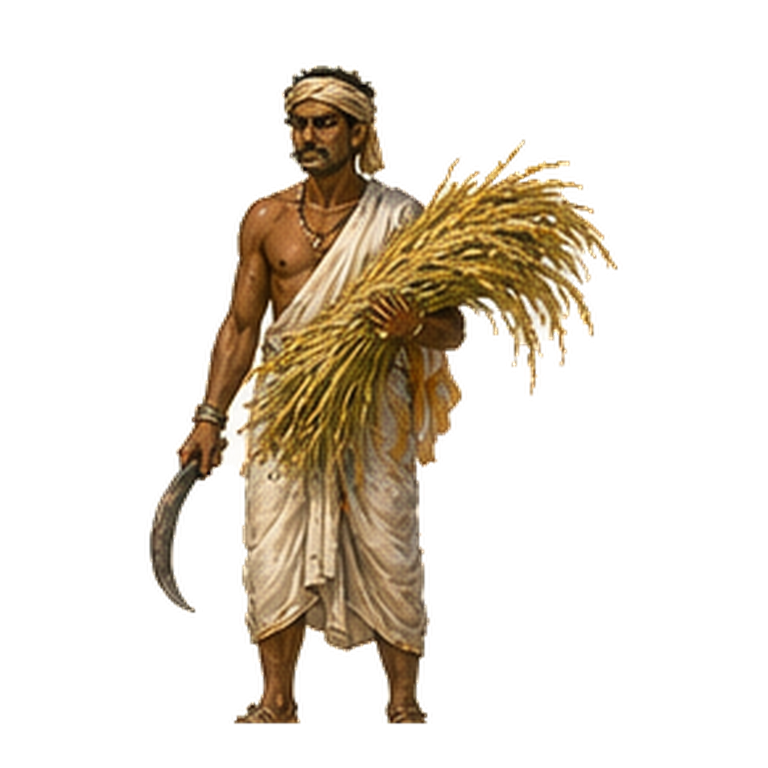
In wet Marutam country, cultivators moved toward paddy fields and channels. Elsewhere, millet, pastoral work, forest products, fishing or salt defined the morning.
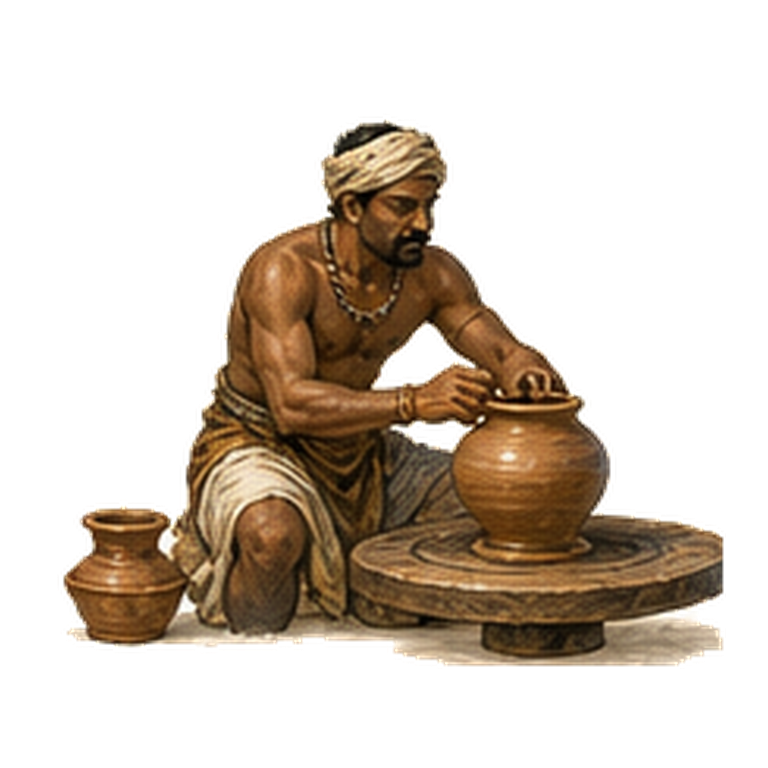
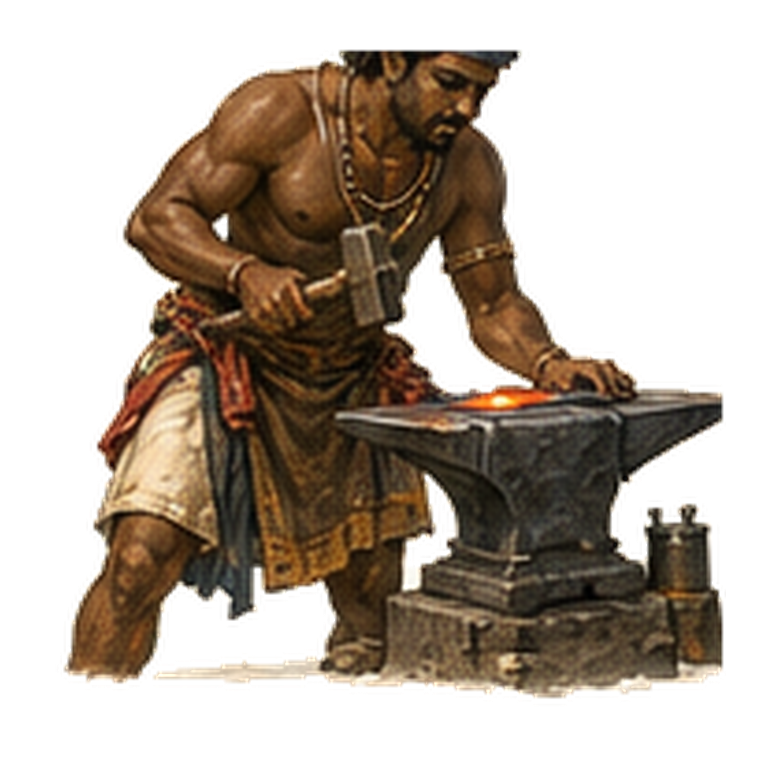
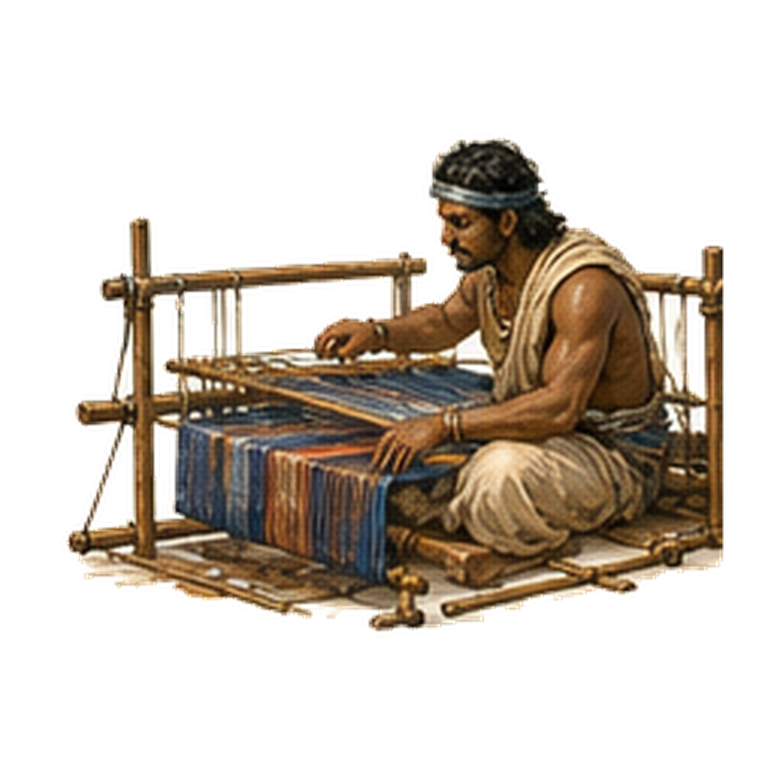
Potters fired black-and-red or red-slipped wares, smiths worked iron, bead makers drilled stone and shell, and spinners prepared thread.
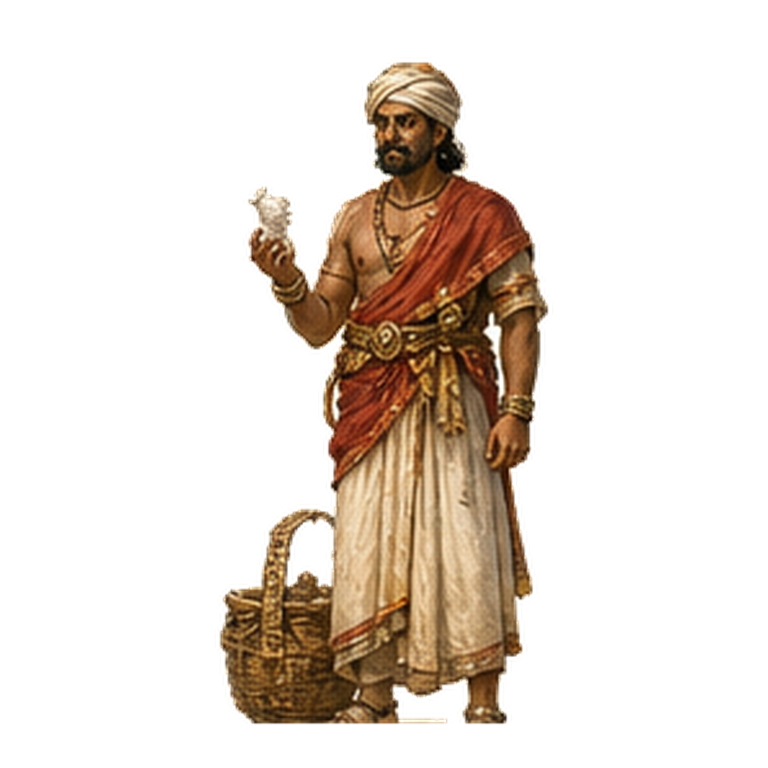
Farm produce, salt, fish, textiles, ornaments and imported goods changed hands. Weights, coins, seals and marked pottery reveal multiple systems of value and identity.
Pack animals, bullock carts, river craft and stitched-plank vessels linked capitals, inland production centers, pearl fisheries and ports.
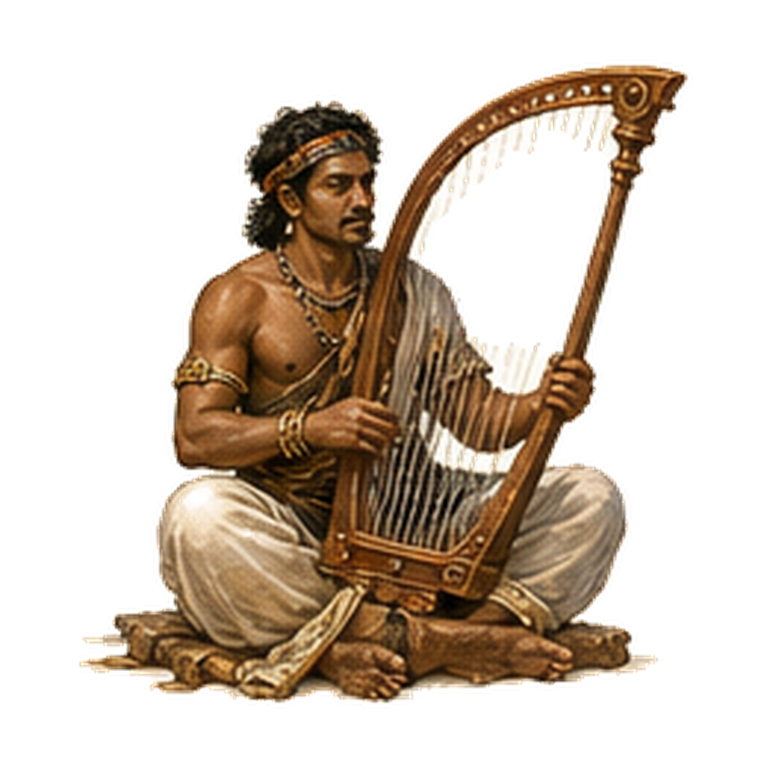
Bards performed praise and love poetry; households and communities honored deities, ancestors, guardian powers and the heroic dead in varied settings.
By Pallava and Chola centuries, large temples scheduled lamps, food offerings, recitation, music, festivals, land management and specialized work.
Home & body
Daily life was produced through food, water, housing, clothing, kinship and unequal access to labor and resources.
Tamil poetic grammar linked hill, pastoral, agricultural, coast and arid zones with livelihoods, emotions, flora, fauna and divine associations. It was a literary system grounded in real ecological contrasts.
Keeladi has yielded brick structures, roof tiles, drains, ring wells, spindle whorls, games, ornaments and inscribed pottery, complicating older assumptions about Early Historic urbanism.
Rice, millets, pulses, dairy, fish, meat, toddy, fruits and spices appear across literature and archaeology. Access depended on region, season and status.
Spindle whorls, weaving tools, beads, shell bangles, gold and semi-precious stones point to skilled production and social display.
Sangam anthologies evoke rulers, warriors, bards, lovers, mothers, farmers, hunters and traders, but they are crafted literature rather than a transparent census.
Tanks, wells, channels and river control supported settlement and cultivation; later inscriptions show increasingly organized endowments and maintenance responsibilities.
Production & exchange
The spectacular monument depended on ordinary systems of land, skill, transport, accounting and coerced or dependent labor.
Paddy farmers, millet growers, cattle herders and agricultural laborers adapted to river plains, uplands and seasonal risk.
Kodumanal and other sites reveal carnelian, quartz, glass and shell work. Cotton spinning and weaving supplied households and exchange networks.
Furnaces, slag, tools, weapons and diverse ceramics show technical specialization serving farming, war, storage, cooking and trade.
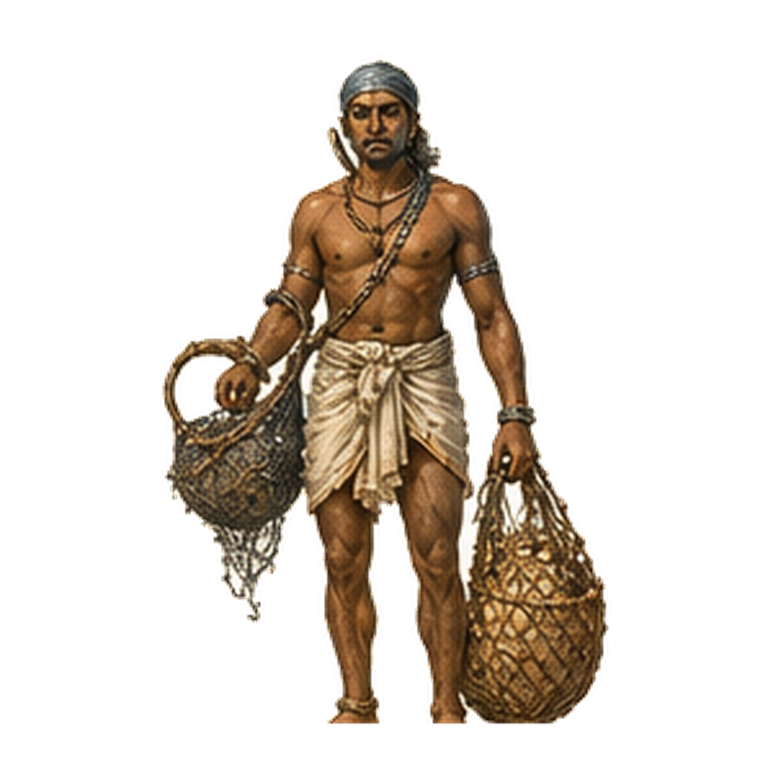
Korkai's pearl fishery and coastal occupations linked divers, fishers, salt workers, merchants and ruling powers.
Poompuhar, Korkai and other coastal sites connected inland production to the Indian Ocean. Imported amphorae and distant materials signal exchange, not simple cultural replacement.
In later centuries, priests, cooks, gardeners, lamp suppliers, accountants, dancers, musicians, guards and artisans worked within temple-centered economies and ritual calendars.
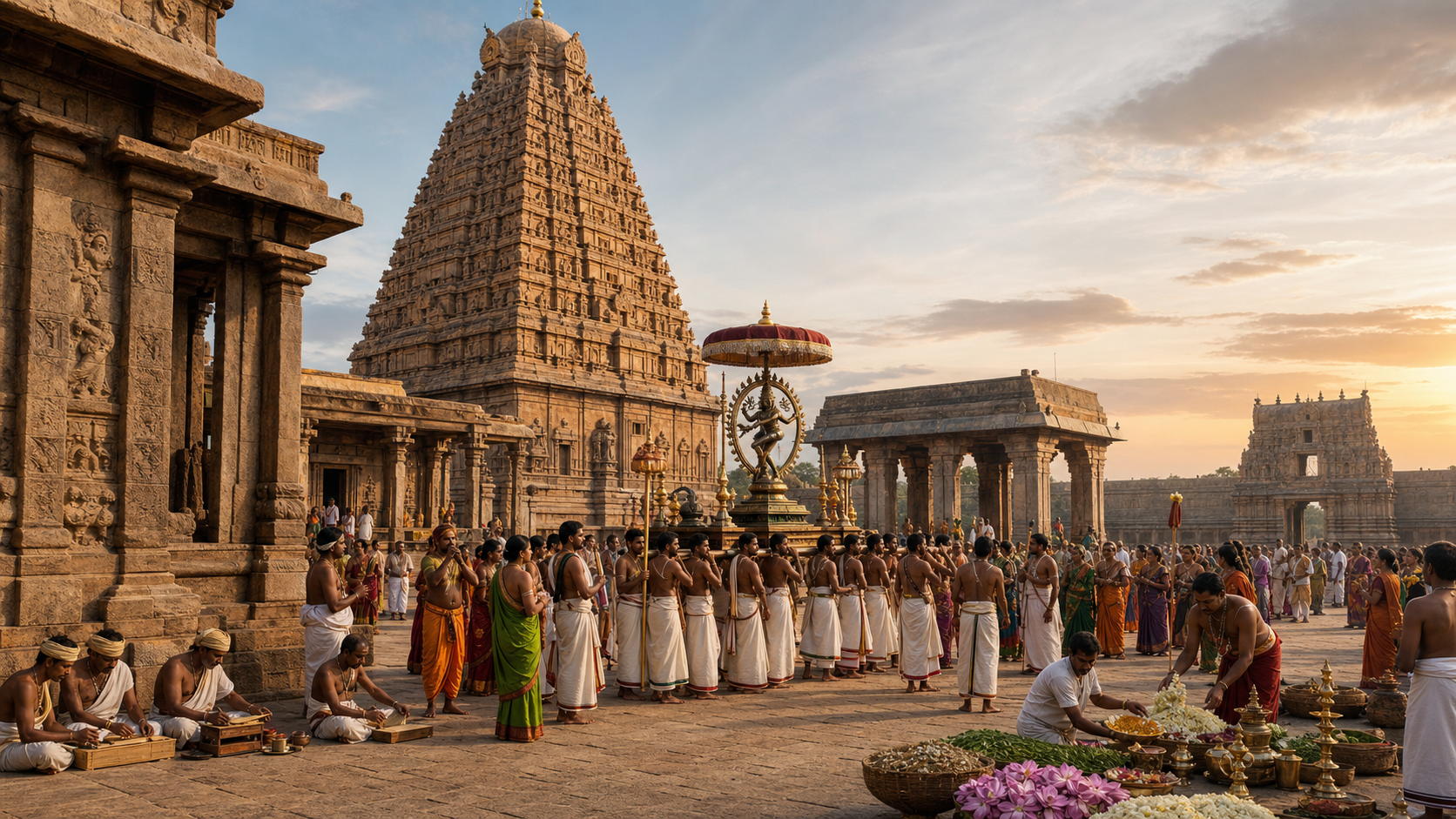
Original interpretive reconstruction. Ritual access and actions are simplified for one readable scene.
Ritual practice
Ancient Tamil worship was never one fixed system. Early poetry and archaeology point to landscape deities, hero memorials, possession, vows and household or community offerings; later Bhakti, Agamic temples and royal patronage reorganized sacred space at monumental scale.
Murugan/Seyon, Mayon, Korravai and Varunan were associated in literary tradition with distinct landscapes, while village and lineage powers remained locally specific.
Memorial stones honored people who died in valued acts, especially cattle defense or battle; inscription, image and offering kept social memory active.
Flowers, food, lamps, music, dance, sacrifice or embodied performance could mark requests, thanks and protection.
From the early medieval period, Tamil Shaiva Nayanmars and Vaishnava Alvars shaped temple-centered devotional communities through vernacular hymns.
Consecrated images received scheduled bathing, dressing, food, lamps and recitation in restricted sanctums.
Portable bronze images moved through streets, connecting deity, temple staff, donors, merchants, neighborhoods and performers.
Sacred figures and powers
Hill-associated youthful deity of beauty, warfare and the vel, with deep Tamil devotional histories.
Pastoral-associated dark deity later central to Tamil Vaishnava traditions.
Victory and war goddess with fierce protective associations.
Central to Pallava and Chola temple building and Tamil Shaiva Bhakti.
Central to Tamil Vaishnava hymn, pilgrimage and major temple institutions.
Goddess worship in many local and temple forms addresses protection, fertility, illness and communal identity.
Power & belonging
Status came from overlapping legal, political, household, occupational, gendered and dependent relationships.
Chera, Chola, Pandya and Velir patrons competed through war, gifts, feasts, poetry, ports and control of productive landscapes.
Landholding, labor and ecological skill shaped food production; status was not uniform within occupational groups.
Specialists in iron, beads, textiles, pottery, salt and shipping linked settlements. Later guild inscriptions show organized collective identities.
Poets carried fame, criticism and cultural memory between courts and assemblies; literacy also appears on ordinary potsherds.
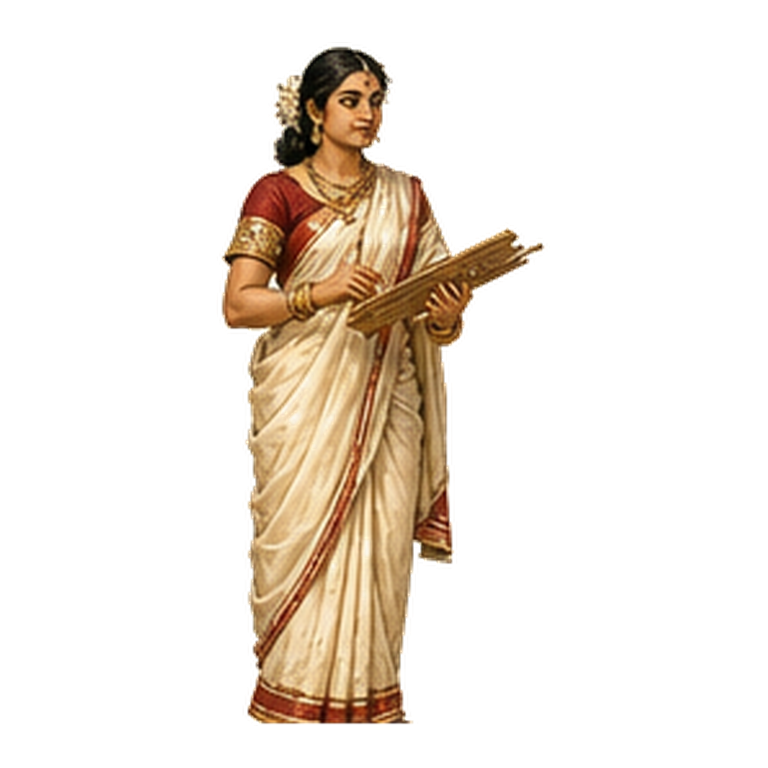
Literature names women poets and represents labor, love, waiting, grief and political counsel, while later inscriptions record female donors; experience still varied by status and setting.
Material lives
Objects connect technique to routine: each one belongs to a chain of material sourcing, skilled labor and social use.
A vessel fragment marked with letters, often after firing, linking literacy to ownership and everyday objects.
Small weighted disc used to spin fiber into thread; common evidence for textile work.
Hard semi-precious stone drilled and polished by specialists for local use and trade.
Kodumanal and other sites show advanced ironworking across agriculture, craft and warfare.
Stacked terracotta rings forming a durable shaft associated with urban water or drainage.
A consecrated metal image engineered for ritual presence and festival movement, not merely gallery display.
Named lives
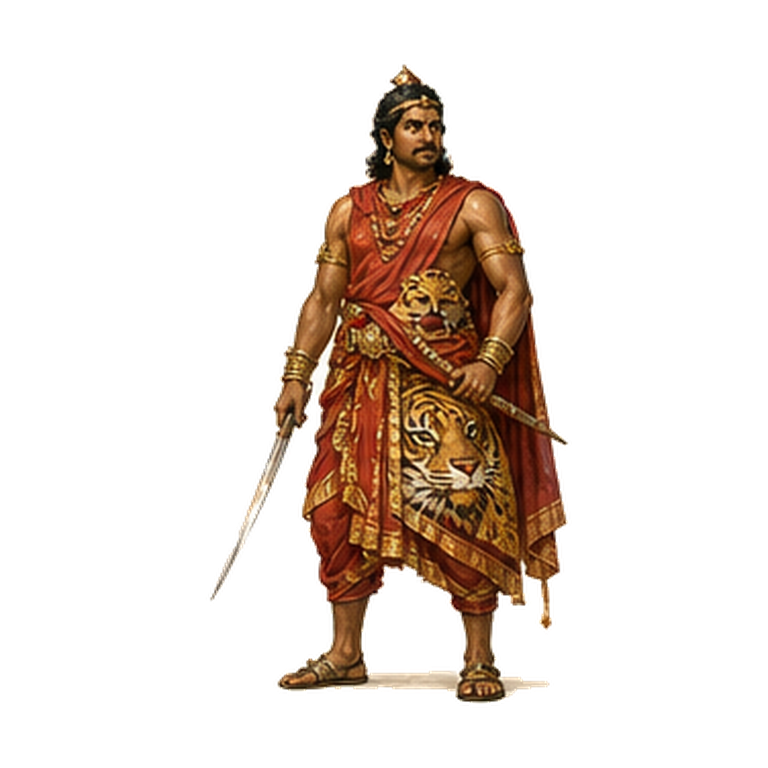
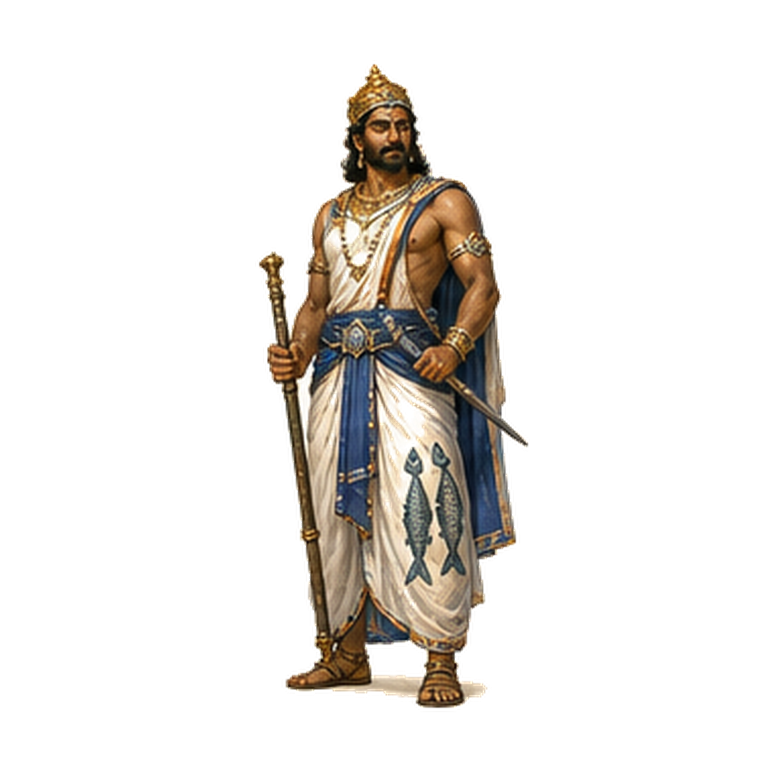
A name survives because a document, monument or later tradition preserved it. Famous rulers are placed beside poets, workers and officials where evidence allows.
Name associated with major women poets in Tamil tradition; early poems speak in distinct voices on ethics, war, generosity and relationship.
Early Chola ruler celebrated in literary tradition, especially in relation to warfare, patronage and Kaveri landscapes.
Pandya royal name borne by more than one ruler in early Tamil traditions and inscriptions.
Pallava king linked to 7th-century rock-cut architecture and literary patronage.
Pallava ruler associated with Mamallapuram's major experiments in monolithic and relief carving.
Chola emperor who founded the Brihadisvara Temple at Thanjavur and documented extensive ritual and institutional endowments.
Chola emperor who created Gangaikondacholapuram and extended political and maritime campaigns.
Chola queen and donor influential in temple renewal and the patronage of metal and stone images.
Atlas
Each site offers a different scale of evidence: house, port, sanctuary, capital, cemetery or workshop settlement.
Vaigai-region settlement with structures, craft debris, games, ornaments and Tamil-Brahmi finds.
Inland craft and burial site on routes connecting the Chera region with the Kaveri basin.
Pandya-associated pearl-fishing port near the Tamiraparani.
Kaveri-mouth port and Chola center preserved in literature, excavation and underwater investigation.
Pallava port and 7th-8th-century laboratory of cave, monolithic, relief and structural architecture.
Chola royal center dominated by Rajaraja I's Brihadisvara Temple and its inscriptions, painting and sculpture.
Rajendra I's capital and temple landscape, designed as a new statement of Chola kingship.
Home of the highly ornate 12th-century Airavatesvara Temple and its sculpted ritual world.
Source ledger
Museum, university, archaeology-department and UNESCO resources are used as starting points. Follow the links for object records, excavation reports and deeper bibliographies.
Excavation evidence for brick structures, roof tiles, craft activity and Tamil-Brahmi literacy.
Tamil Nadu Department of ArchaeologyUrban water features and finds including games, spindle whorls, ornaments and weighing stones.
Tamil Nadu Department of ArchaeologyThe pearl-fishing port, brick remains and Tamil-Brahmi pottery.
Tamil Nadu Department of ArchaeologyBead production, iron weapons, pottery, burials and long-distance material connections.
Tamil Nadu Department of ArchaeologyA Sangam-period Chola port with excavated brick and timber waterfront structures.
Tamil Nadu Department of ArchaeologyEvidence for regional and later transregional merchant and agricultural guilds.
Tamil Nadu Department of ArchaeologyArchitecture, ritual continuity, sculpture, painting, bronze casting and Chola royal ideology.
UNESCO World Heritage CentrePallava port, rock-cut caves, monolithic rathas, reliefs and structural temples.
UNESCO World Heritage CentreThe transition from rock-cut to free-standing structural temples and living worship traditions.
UNESCO World Heritage CentreVisual reconstructions were generated for this site from detailed historical prompts. They are labeled as interpretations and are never used as evidence for a claim. Source links support the written account.
Named asset set
Selected transparent character assets from the Hembhuvin Sangam icon system. The validated private-use webfont is an accessible icon carrier, not a historical Tamil writing system.