Rock-cut
Craftspeople excavated sanctuaries and reliefs into hillsides, coordinating architecture and sculpture inside living rock.
Pallava, Pandya and Chola architecture
Eight named monuments read through dynasty, material, sacred plan and continuing worship.
Open the visual atlasNamed AI-assisted architectural reconstruction. Use the linked heritage sources for documentary records.
Read the sequence
Tamil temple architecture was not born fully formed. Rock-cut caves, monolithic models, structural shrines, enclosure systems, sculpture and ritual movement developed through regional experiments.
Craftspeople excavated sanctuaries and reliefs into hillsides, coordinating architecture and sculpture inside living rock.
At sites such as Mamallapuram and Kazhugumalai, complete architectural forms were carved from single rock masses.
Quarried blocks allowed freestanding sanctums, halls, enclosures and towers to expand and be renewed over time.
A temple coordinated worship, lamps, food, music, dance, festivals, endowments, records, land and skilled service.
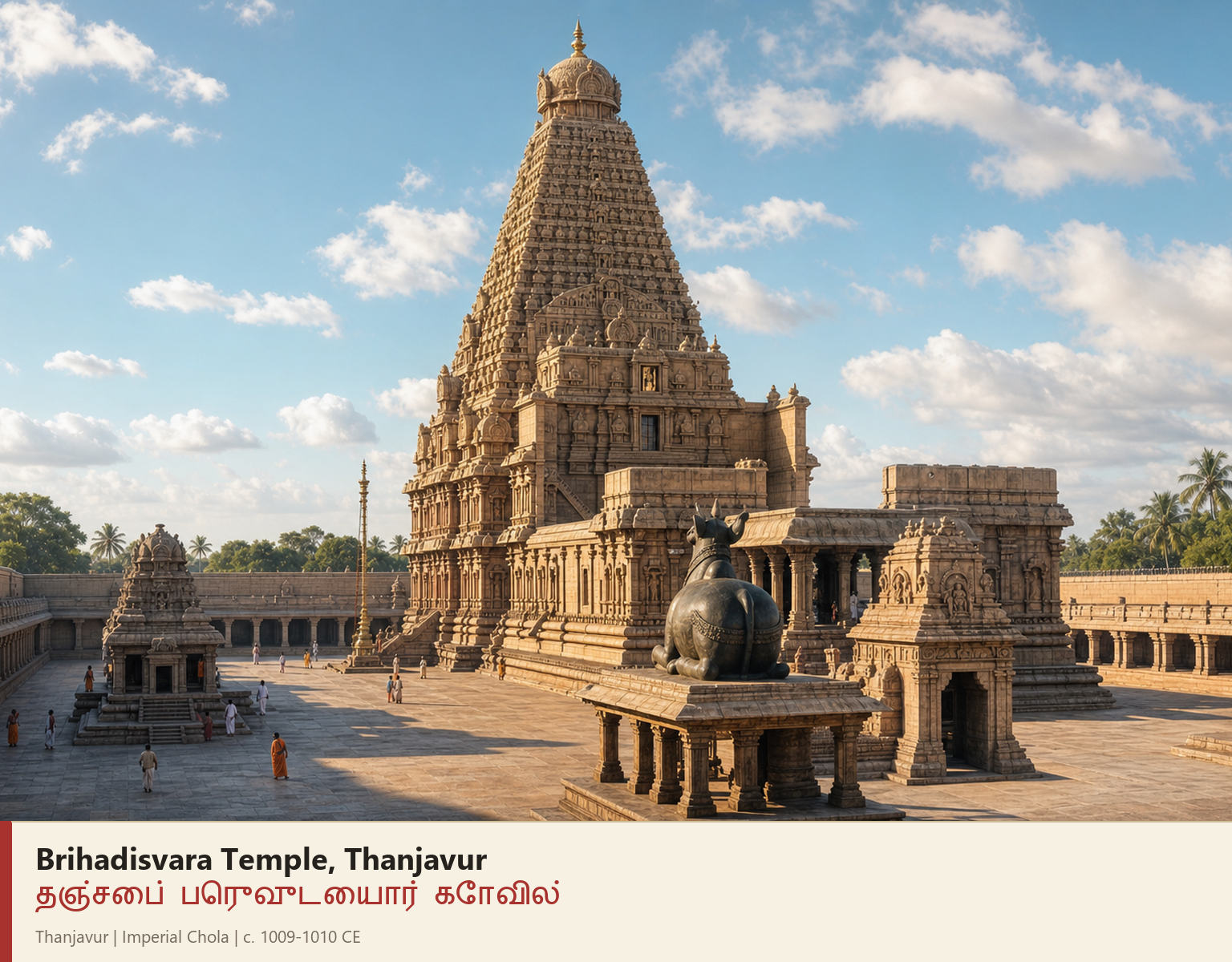
Chola - Rajaraja I
பெருவுடையார் கோயில், தஞ்சாவூர்
A granite royal temple whose tall, straight-sided vimana, inscriptions, murals, sculpture and ritual endowments made it a defining statement of Chola kingship.
Heritage context: UNESCO World Heritage Centre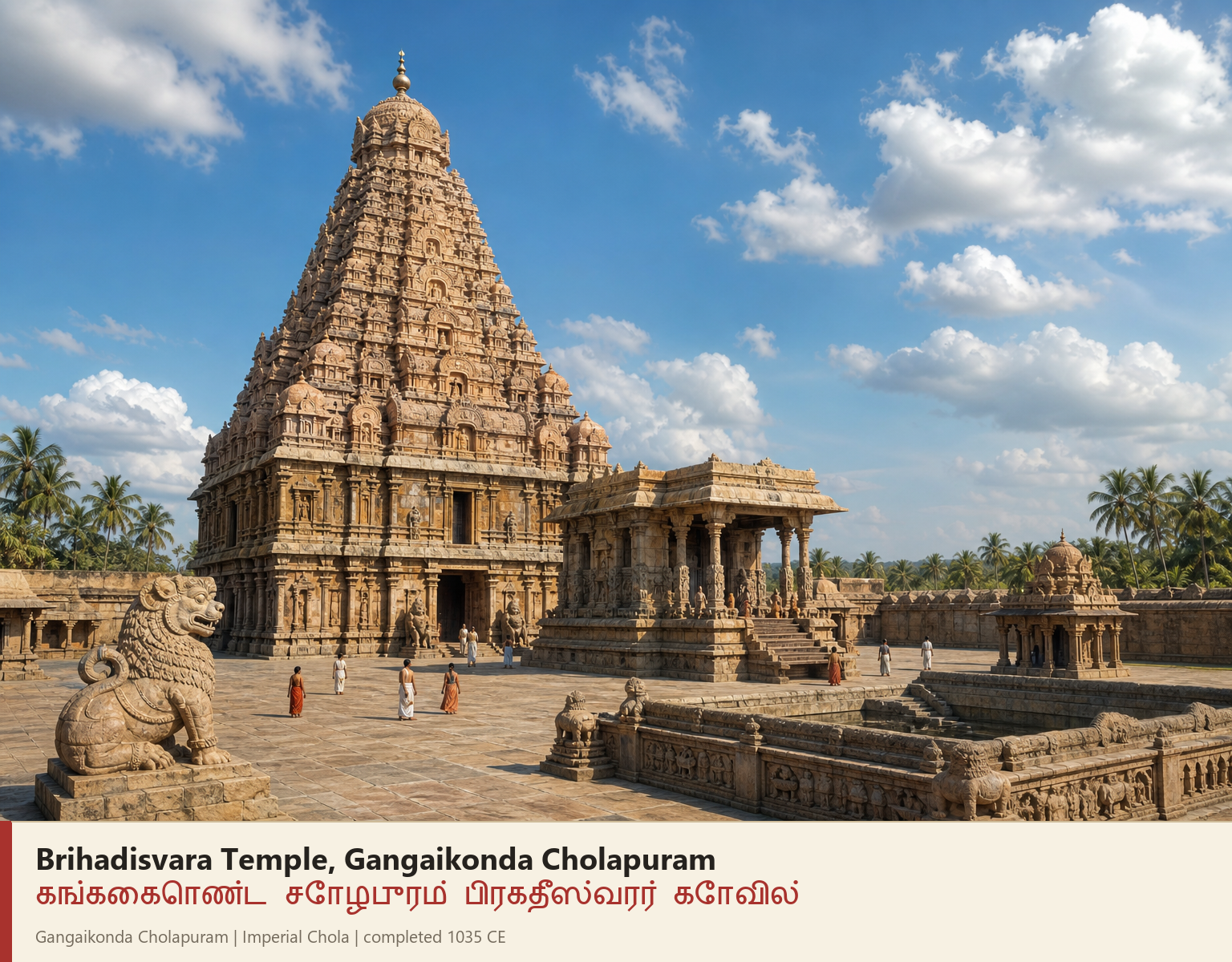
Chola - Rajendra I
பிரகதீஸ்வரர் கோயில், கங்கைகொண்டசோழபுரம்
Rajendra I's temple adapts the Thanjavur model with a more curving tower profile, exceptional sculpture and a capital-city setting.
Heritage context: UNESCO World Heritage Centre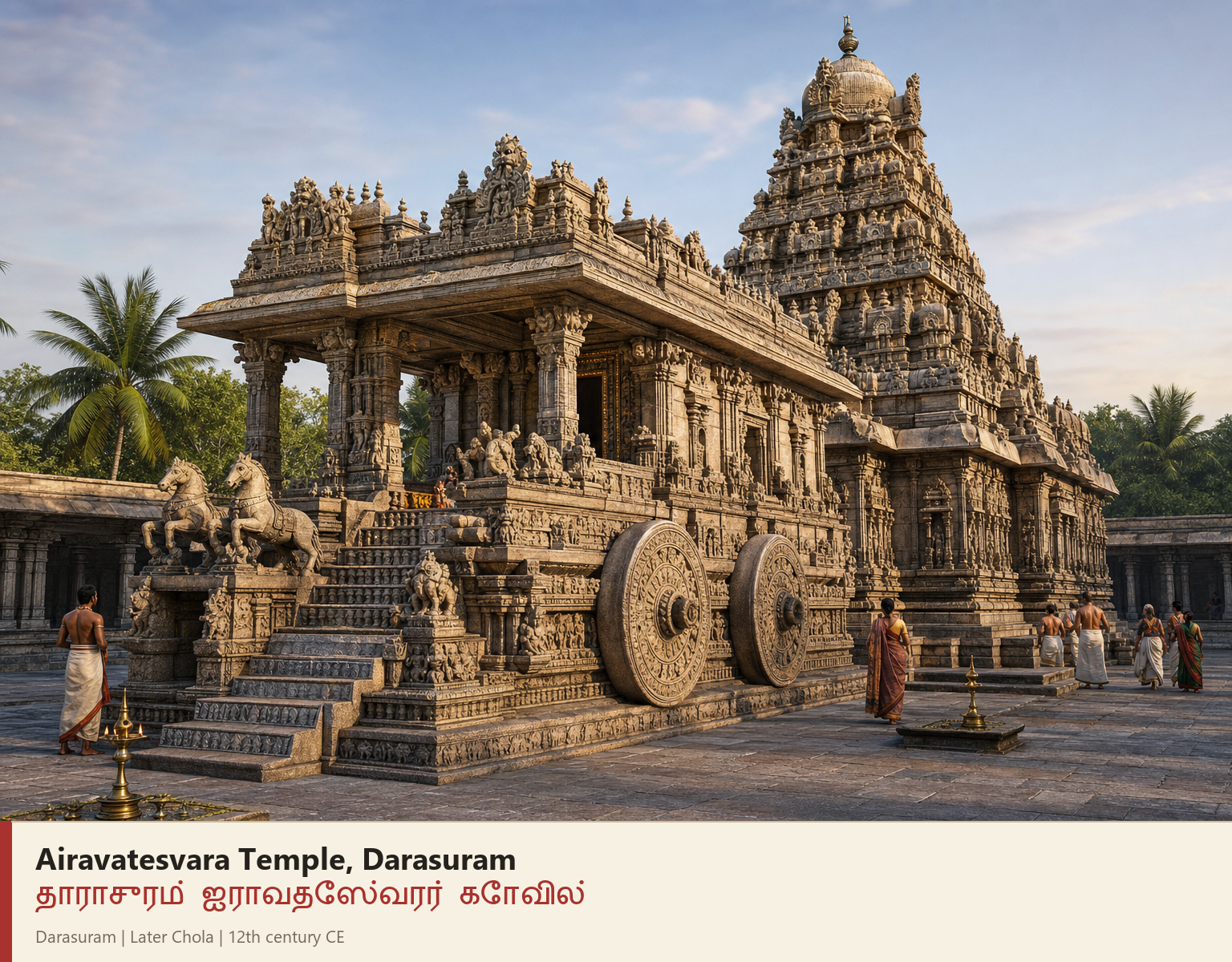
Chola - Rajaraja II
ஐராவதேஸ்வரர் கோயில், தாராசுரம்
A compact, highly ornate complex whose front mandapa is conceived as a stone chariot and whose miniature narrative friezes reward close viewing.
Heritage context: UNESCO World Heritage Centre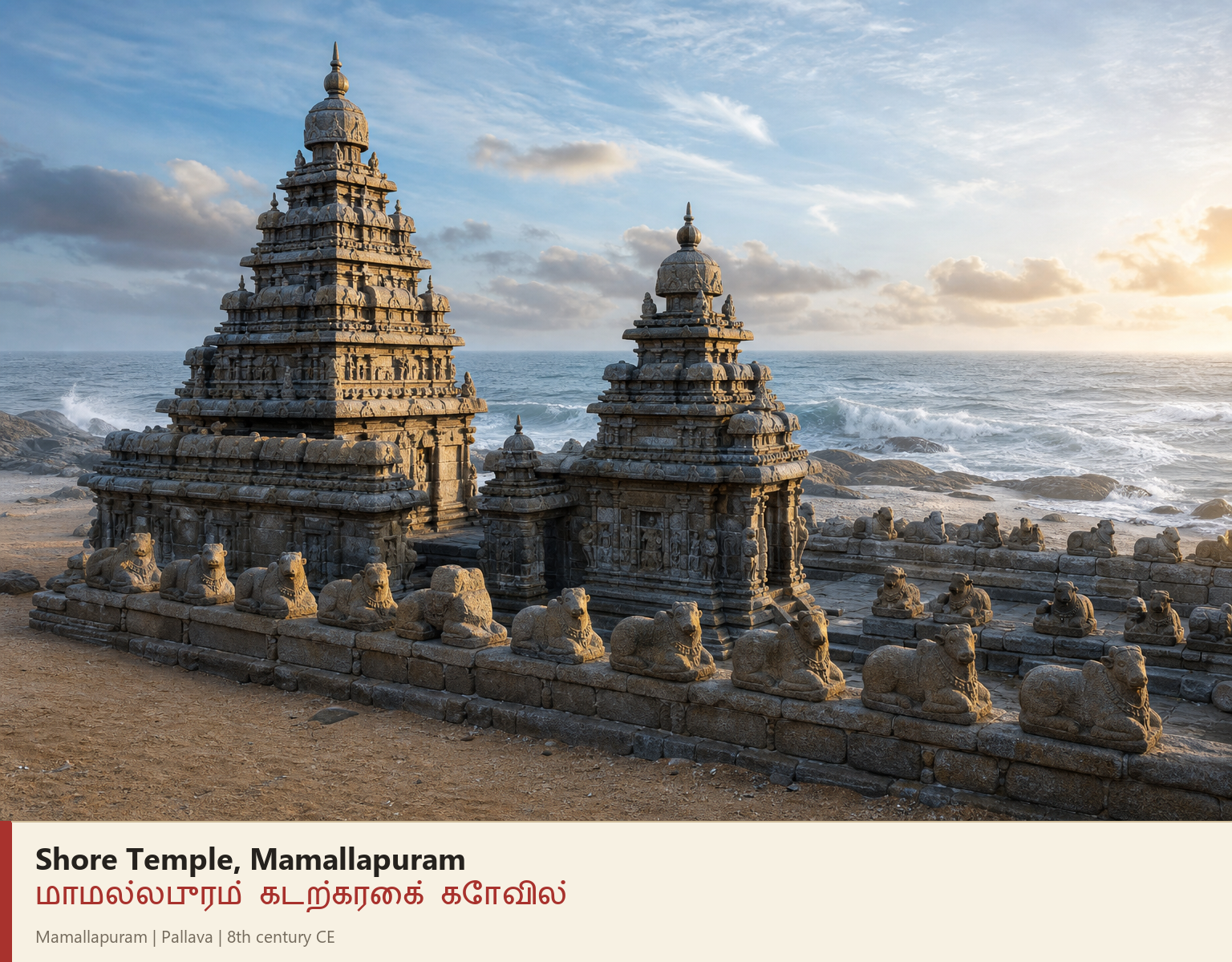
Pallava - Rajasimha
கடற்கரைக் கோயில், மாமல்லபுரம்
One of the Pallava port's major structural temples, placed dramatically on the Coromandel coast after generations of rock-cut and monolithic experimentation.
Heritage context: UNESCO World Heritage Centre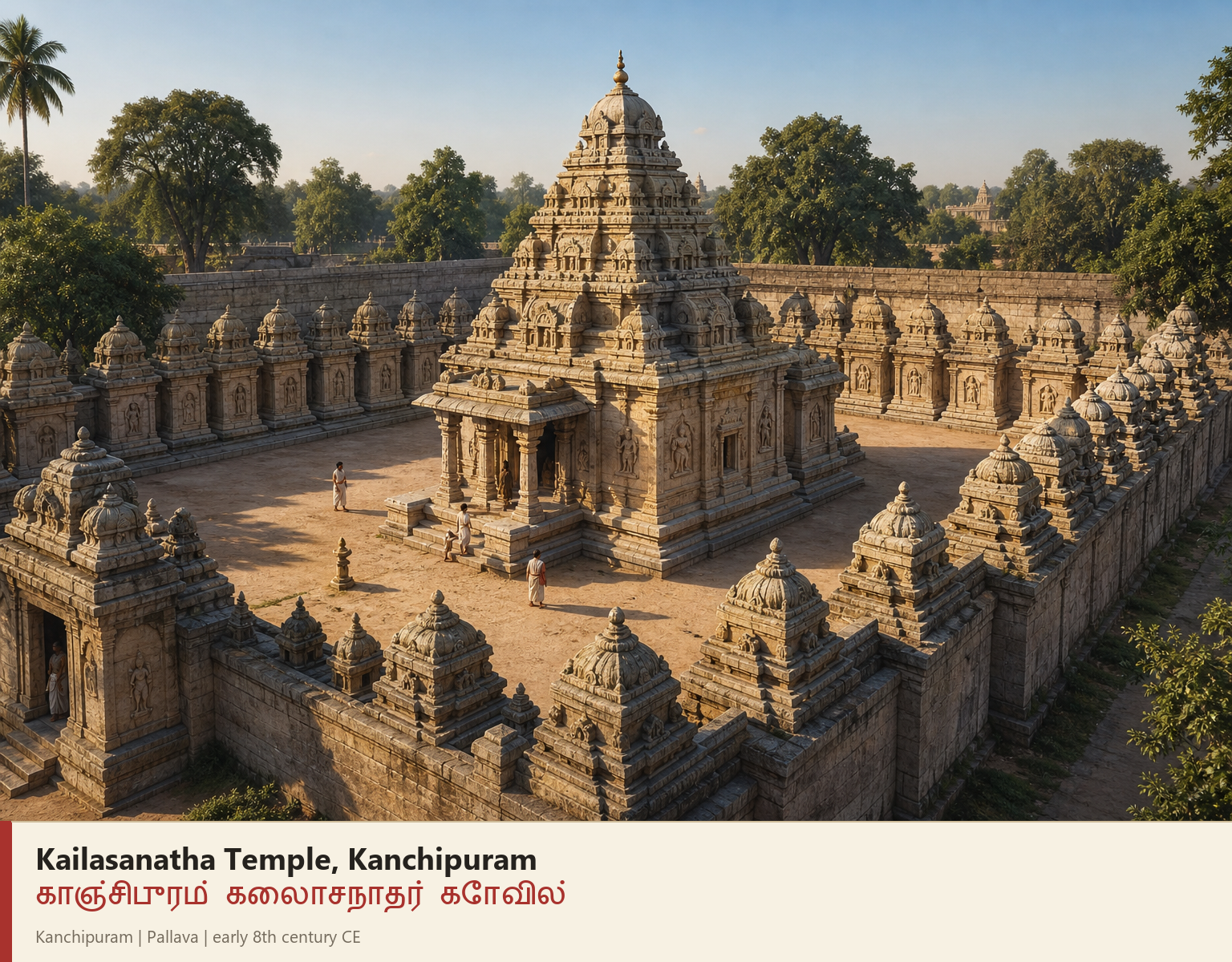
Pallava - Rajasimha
கைலாசநாதர் கோயில், காஞ்சிபுரம்
An early freestanding sandstone temple with a central Shiva shrine, enclosing sub-shrines and an influential Dravidian architectural vocabulary.
Heritage context: UNESCO World Heritage Centre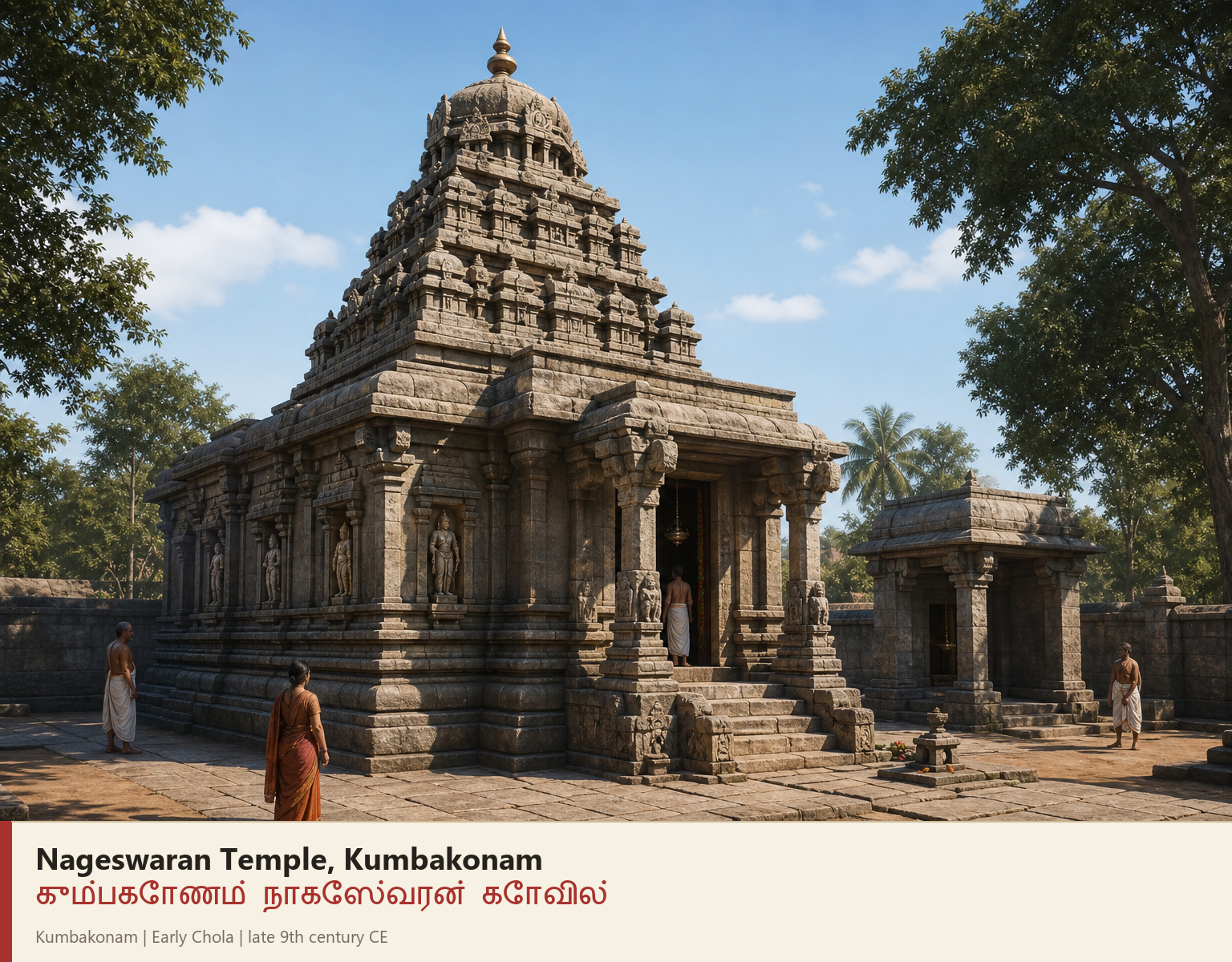
Early Chola
நாகேஸ்வரன் கோயில், கும்பகோணம்
An early Chola Shiva temple noted for compact stone architecture and sculptural niches, embedded in the later sacred city of Kumbakonam.
Heritage context: UNESCO World Heritage Centre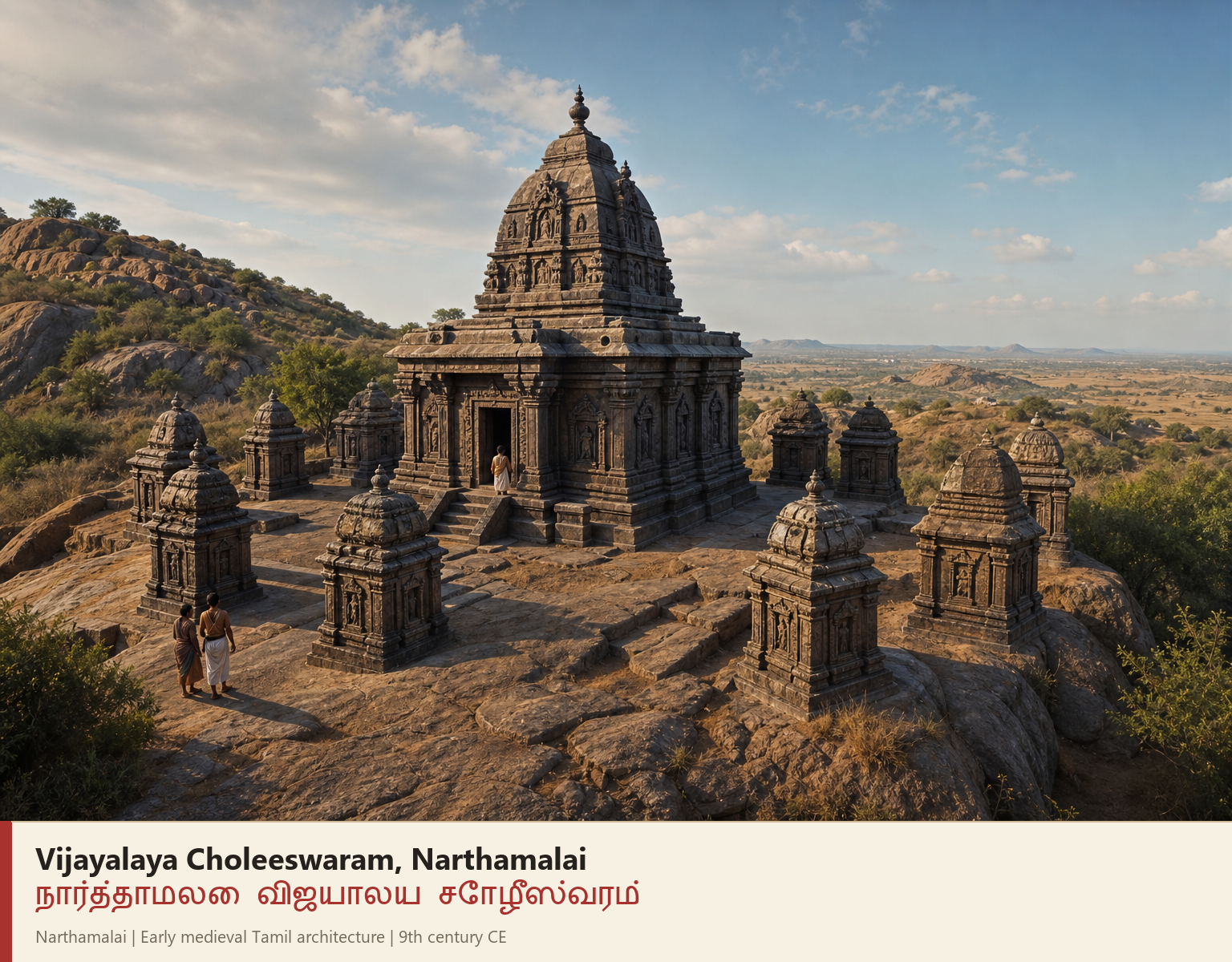
Muttaraiyar / early Chola context
விஜயாலய சோழீஸ்வரம், நார்த்தாமலை
A hill temple with a distinctive circular inner shrine and layered regional patronage; its conventional name does not settle every question about original sponsorship.
Heritage context: UNESCO World Heritage Centre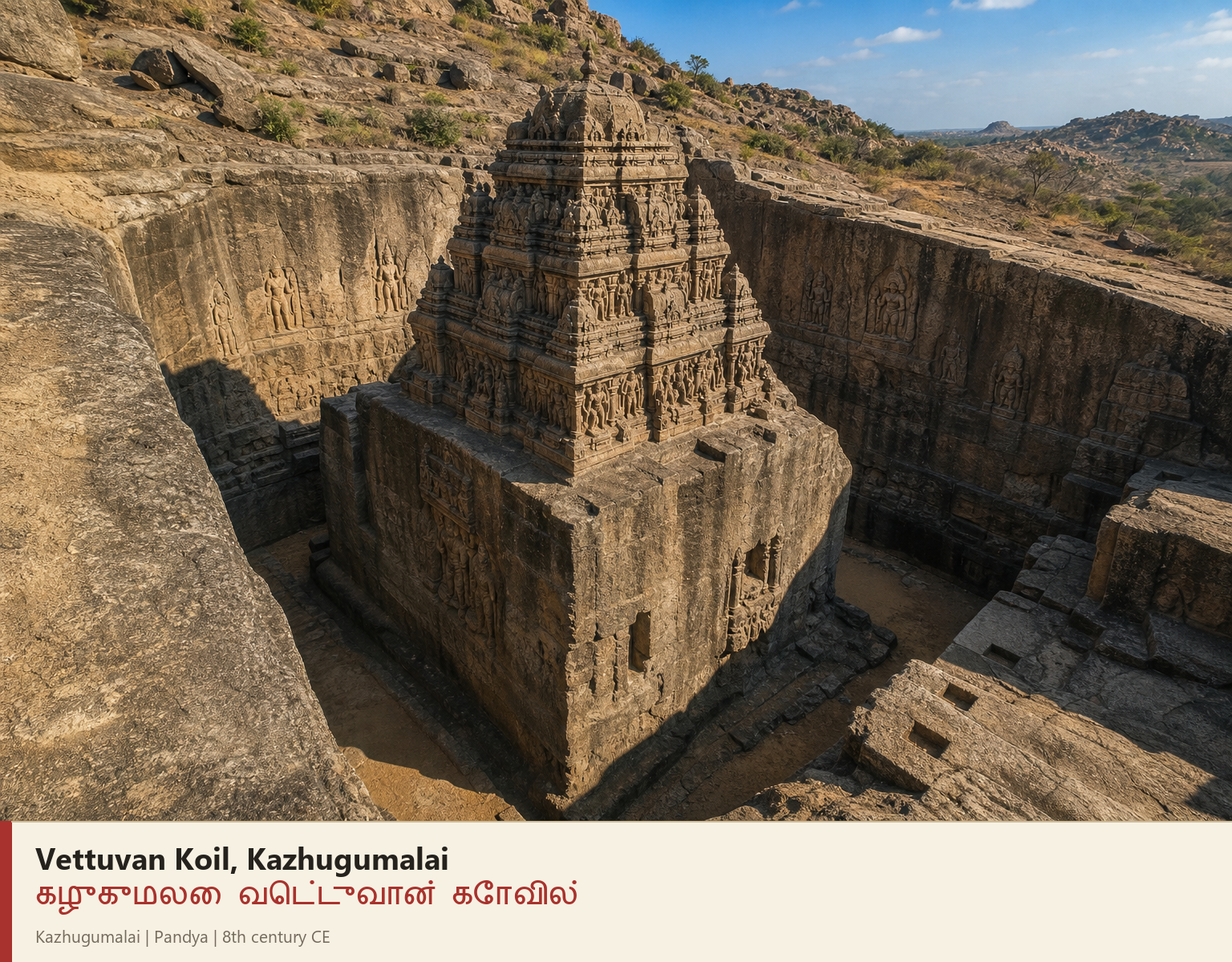
Pandya
வெட்டுவான் கோயில், கழுகுமலை
An unfinished monolithic temple cut downward from living rock, preserving the process and ambition of Pandya-period stone carving.
Heritage context: UNESCO World Heritage CentreArchitecture is action
Plan and elevation mattered because people moved, waited, heard, saw, carried, prepared and offered within them.
Street, gateway and enclosure announced a transition from settlement to consecrated territory.
Circumambulation organized reverence through directional movement around the sanctum or sacred complex.
Mandapas created space for waiting, recitation, offerings, music, assembly and festival preparation.
The sanctum focused attention on a consecrated image approached through controlled access and scheduled service.
Festival images crossed the threshold and entered streets, extending temple relationships into the wider community.
Food, flowers, lamps, music, repair and records required land, donors, workers, materials and recurring administration.